
You read that right. Sony physical games 2028… it ends here. New PlayStation games will no longer release on physical disc. No more cases. No more disc art. No more midnight runs to GameStop. Just… digital. Forever.
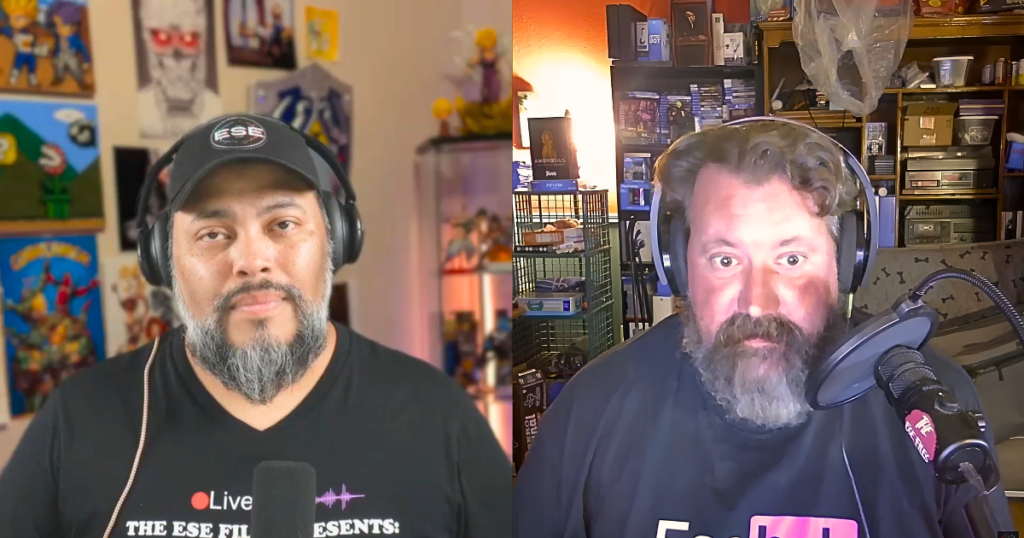
BB and Minarum spent a whole week trying to find the silver lining. We came up with two things. Two.
That should tell you everything.
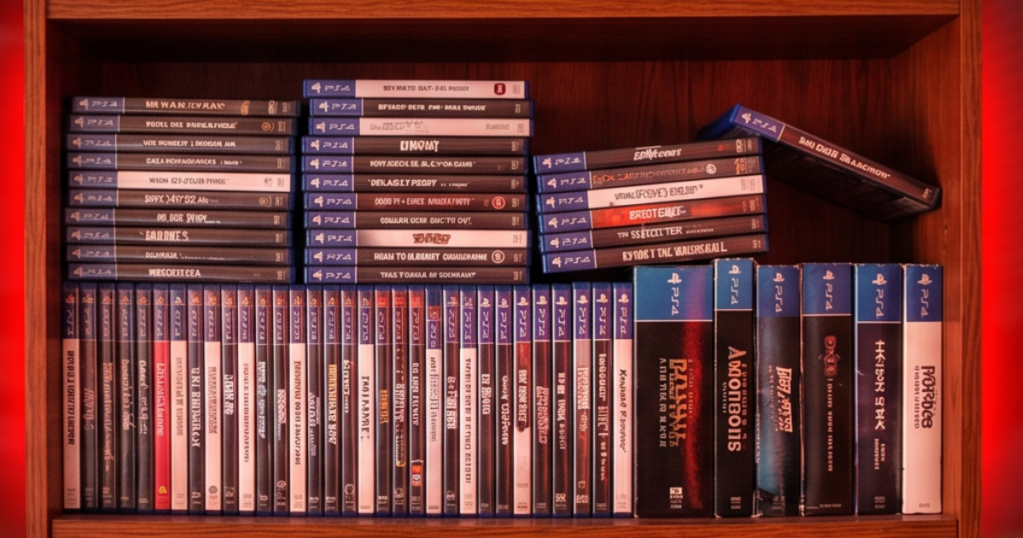
Table of Contents
Wait, How Did We Even Get Here?
Before we go full rage mode, let’s be honest about something. Digital gaming got popular for a reason, and that reason is convenience.
Think about the last time you actually drove to a store at midnight to grab a game. For most of us, that answer is “a while ago” or “never.” BB used to do midnight releases back when his wife worked at GameStop and they actually made it fun. Tournaments, people hanging out, that whole energy. Then GameStop stopped making it fun, and the whole ritual kind of died.
Minarum? Never did a single midnight release. Not once. Pre-ordered everything and had it shipped to the house.
And honestly? That’s kind of the point. Digital made sense for a lot of people. You pre-order, it pre-loads, and at midnight the game just… unlocks. You don’t have to get dressed. You don’t have to go anywhere. It’s already sitting there on your console waiting for you.
That part is genuinely great. Nobody’s arguing that.
The Part Where Digital Actually Works
Look, there are real pros to going digital. We’re not going to pretend otherwise.
Console sharing is a big one. If you buy a digital game and set up console sharing with a family member or a friend you trust, you can both play off one purchase. Depending on the platform, that can stretch to two or three people. For co-op games especially, that’s a massive deal. And if you’re still figuring out which co-op games are actually worth playing with your squad, we put together a list of the ones we’ve actually played together — check it out here.
Indie developers breathe easier too. When you’re a small studio, the cost of printing discs, designing cases, handling distribution, and managing logistics can eat into your budget fast. Digital removes all of that pressure. Most indie devs have been digital-only for years already, and honestly, it’s probably the smarter move for them.
Pre-loading is legitimately convenient. The game downloads hours before launch, sits compressed on your drive, and the second the clock hits midnight it decompresses and you’re in. No server rush, no waiting. That’s a smooth experience.
And yeah, there’s the environmental angle. A 2025 study by carbon accounting firm Greenly found that physical disc distribution is roughly 100 times more carbon-intensive than a local digital download. Pressing and shipping one million Blu-ray discs generates around 312 tonnes of CO₂. Downloading that same volume of games digitally? About 3 tonnes. That’s not a small difference.
So the eco argument is real. We’ll give Sony that one.
Okay, Now Here’s Where It Falls Apart
Minarum spent a week trying to build a fair case for Sony’s decision. He landed on two pros: Sony saves money on manufacturing, and it’s better for the environment.
That’s it. Two things.
Meanwhile, the cons list? That thing goes on forever.
You Don’t Actually Own Anything
This is the one that stings the most. When you buy a digital game, you’re not buying a game. You’re buying a license to access that game, and that license can be revoked. California actually passed a law in 2025 requiring digital storefronts to disclose this clearly — they can’t just say “buy” without explaining that what you’re really getting is a revocable license.
Sony, Nintendo, Xbox — any of them can pull a game from your library if licensing expires, if the storefront shuts down, or if your account gets banned. And if your account gets banned? Everything’s gone. Every game you ever “bought.” Gone.
With a physical copy, you get banned? Who cares. Pop the disc in on a new account and keep playing. The game is yours.
They tried to sell us on digital back in the day by pricing it five dollars cheaper than physical. That lasted maybe two years before they bumped it to full price. Now we’re paying $70 to rent a license. And the price keeps going up.
The Storage Problem Is Real
The base PS5 exposes about 667 gigabytes of usable storage. Modern AAA games regularly hit 100 gigabytes or more. STALKER 2 needs 160GB. Flight Simulator 2025 wants 150GB. Monster Hunter Wilds sits at 135GB.
Do the math. You can fit maybe five big games on a base PS5 before you’re making hard choices about what to delete. And then Sony wants you to go fully digital with no disc option as a backup?
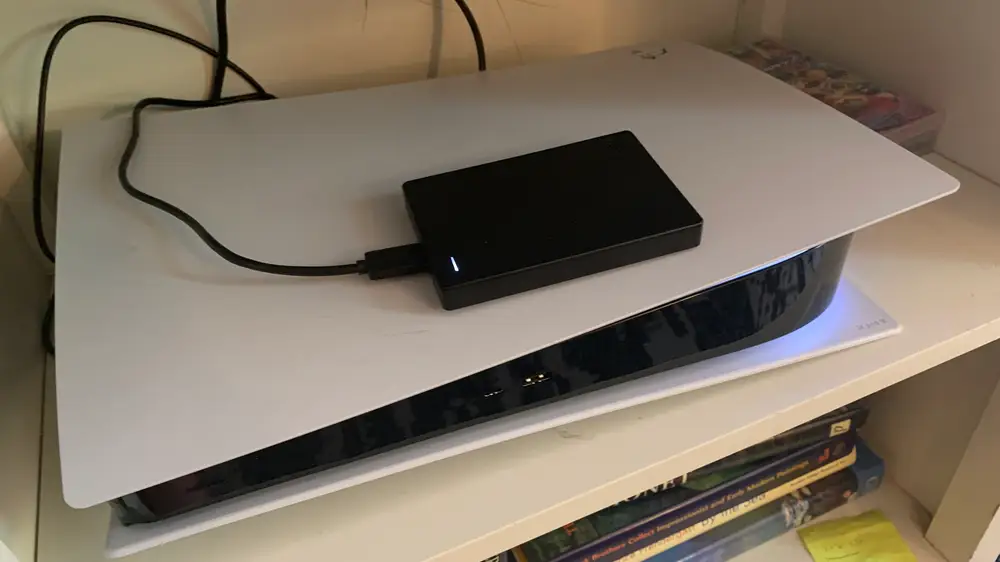
That forces you to buy an NVMe expansion drive just to manage your library. It’s an extra expense that gets quietly pushed onto the consumer while the platform holder saves money on manufacturing. Minarum runs an external drive on his PS5 already. BB does too. It’s convenient, sure, but it still costs money that nobody asked to spend.
The Monopoly Problem Nobody Talks About Enough
On PC, you’ve got Steam, GOG, Epic, and a bunch of third-party key sellers all competing for your money. That competition drives prices down. Sales get aggressive. You can find deals.
On PlayStation? There’s one store. The PlayStation Store. That’s it.
Sony actually settled a $7.85 million antitrust lawsuit in the U.S. in April 2026 over their 2019 decision to ban third-party retailers from selling digital download codes. One store, no competition, and they set whatever price they want for however long they want.
Physical retail used to fix this. You could shop around. Target, Walmart, GameStop, Amazon — they all competed on price. That kept costs down over a game’s lifecycle. Going fully digital kills that entirely.
The Used Market Is Dead
BB picked up Borderlands 3 with all the DLC for about ten bucks a year after launch. That kind of deal exists because of the physical used market. You play a game, you’re done with it, you sell it or trade it. Someone else gets it cheaper. The value circulates.
Digital kills that completely. You buy it, you’re stuck with it. No resale. No lending it to a friend. No trading it in toward something else. The entire second-hand market disappears, and that value transfers straight to the publisher.
Game Preservation Takes a Hit
This one matters more than people realize. The Video Game History Foundation found that only 13% of classic games released between 1960 and 2009 are still commercially available. 87% are just gone.
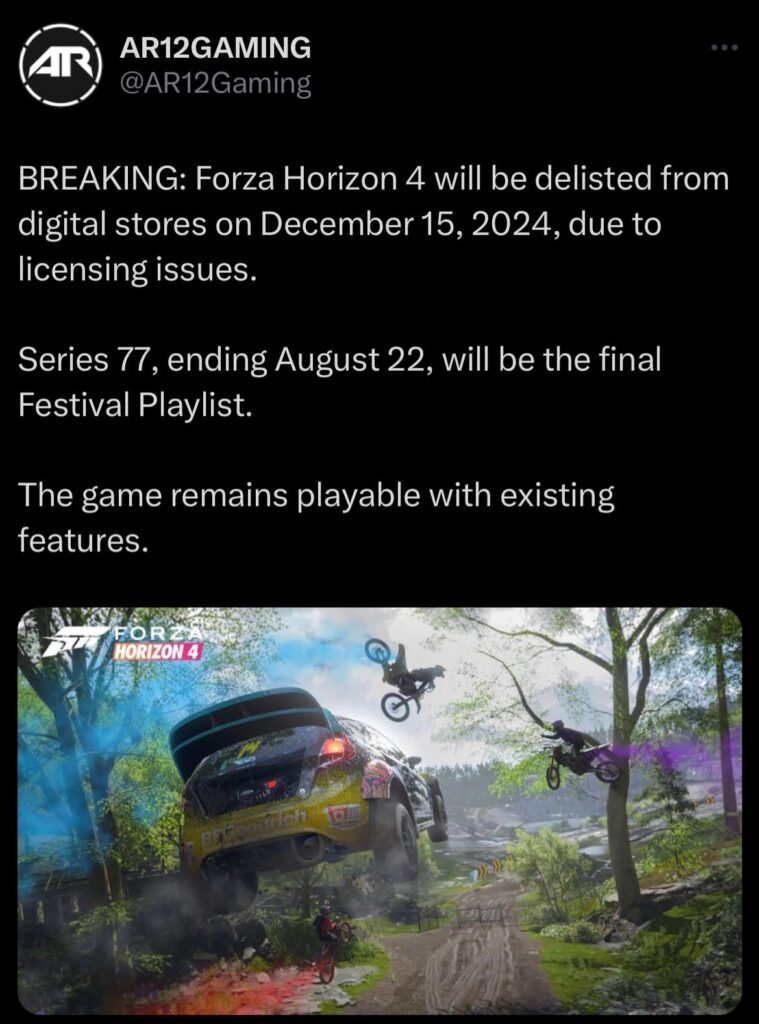
Digital-only games are even more vulnerable. Forza Horizon 4 got delisted from digital storefronts in December 2024 because of expired licensing agreements. Physical disc owners still have their copy. Digital owners lost access to something they paid full price for.
When Sony goes fully digital, every new game released after January 2028 becomes dependent on Sony keeping the lights on. Forever. That’s a lot of trust to put in a corporation.
The Collector’s Gut Punch
Minarum has walls of games in his home. You can see some of it in the video. Halloween sitting there. Rows of cases. Years of collecting.
He’s probably going to buy a PS6. He’ll probably keep PlayStation Plus. But he said flat out he’s not spending money on $70 or $80 digital games. He’ll play the PS+ freebies, the free-to-play stuff, and whatever he already owns physically. That’s where he’s drawing the line.
And he’s not alone. Expedition 33 was sold out physically for six or seven months after launch. People were hunting for it. Amazon finally restocked a special edition and it moved immediately. Physical demand isn’t dead. It’s just being ignored.
Minarum put it well: it feels too early. If physical sales were down to 5% of the market on major releases, this conversation would be different. But physical games are still selling out. Collectors are still buying. The demand is there. Sony is just choosing to walk away from it anyway.
What Happens Next
Sony being the industry leader matters here. When they move, others follow. Microsoft is already developing their next console without an optical drive. Nintendo is pricing physical cartridges $10 higher than digital to push people toward the eShop. The dominoes are already falling.
BB’s take: retro gaming prices are about to go through the roof. If you’ve got a physical collection, hold onto it. The value is only going up from here.
And if you’re a fan of always-online games, the “Stop Killing Games” movement is worth paying attention to. Over 1.29 million people signed a European Citizens’ Initiative demanding that publishers leave discontinued games in a playable state. Ubisoft shut down The Crew’s servers and revoked licenses from players’ accounts, making the game completely unplayable. That’s the future of digital-only gaming if nobody pushes back.
So Where Do We Actually Land?
Digital gaming is convenient. The environmental case is real. Indie developers benefit. Console sharing is genuinely useful.
But going fully digital by 2028 means giving up ownership, killing the used market, handing Sony a monopoly on pricing, and putting game preservation entirely in the hands of a corporation with a financial incentive to keep you buying.
Minarum’s been red about this all week. BB thinks it’s inevitable but way too soon. Both of them agree: if you’re a physical collector, this is the biggest gut punch the industry has thrown in a long time.
The backlash is loud. Whether Sony actually listens is a different question.
Are you okay with going fully digital?
Sony Physical Games 2028 – Where Do You Stand?
The ESE Files Community
Sony is going digital-only by 2028. Where do you stand?
Cast your vote and see where the community lands.
Look, if Sony’s decision has you rethinking how you buy games going forward, GameFly is worth a serious look. It’s one of the last places where you can still rent physical games — actual discs, actual cases — without committing to a full $70 purchase. Try it, play it, send it back. The way it always should’ve worked.
[…] Moments like that are exactly why physical media still has a place in this hobby. You can’t walk up to a vendor table and trade in a digital download. If you’ve ever gone back and forth on whether physical or digital is the better way to build your collection, we broke down the whole debate here. […]